Call it Courage
 Call it Courage, by Armstrong Sperry, features a young boy named Mafatu. He is the son of Tavana Nui, the Great Chief of Hikueruchei, therefore high expectations are set. But to fulfill these, Mafatu has one problem, ever since his mother's life was ripped away from him by the mighty Pacific Ocean, Mafatu has been terrified of the sea that surrounds his village. This fear left him scorned by peers and deemed useless by adults. Instead of fishing and playing games, he was forced to craft spears, nets, and other necessary tools, which is "woman's work." One night he overheard other boys taunts, and decided that enough is enough! Having never gone beyond the reef alone, he unfortunately leaved horribly unprepared, bringing only his two animal friends, a spear, a knife, some provisions, and a string of water nuts. In the open ocean, conquering his fears proved harder then he initially thought, when, at night, he got caught in an ocean storm. Mafatu lost all his belongings and clothes besides his pet dog, Uri and his friend albatross, Kivi. After days of near-death and dehydration, the ocean current carried them to an unfamiliar island, where he and Uri dragged themselves up the beach, exhausted. He bandaged his wounds and rejuvenated himself and Uri with fresh water.While exploring their surroundings they found a temple and idol, presumably made by the cannibals inhabiting the island. Mafatu hoped this was not the case, and it took all his will to snag a spear from one of the corpse human sacrifice's hand. This small action brought him a great feeling of pride and accomplishment though, and he soon built a fire and temporary shelter. The following morning, he fell a great tamanu tree to build a new canoe, as his old one got destroyed in the coral reef. Waiting to burn it out the next day, Mafatu finds the tiresome tasks he was forced to do back home come in handy. He could now swiftly craft many daily-used tools, such as nets, fishhooks,
bowls, and mats. He also replaced his lost clothing, and created spears
and knifes from a beached whale skeleton he was fortunate to find. He made a raft to
use until the canoe is complete, and a fish trap for catching more food
farther offshore. A problem arose, however, when a large hammerhead shark regularly raided the fish trap Mafatu made. He went out and slayed it with his new knife. A short while after, he put the wild boar on the plateau to death with his spear. He had finally finished his canoe and took it for a test drive. As he was pulling up the fish trap his knife fell to the ocean depths. He entered the water to retrieve it, and while he was down there, a mighty octopus seized his body. In desperation, he thrust his knife at it's eye, swiftly killing it. He went back to shore, only to find the black eaters-of- men had came back. They chased him into his canoe and he paddled to the open ocean, towards home, grateful that he already had it ready with supplies. When he finally reunited with his home tribe, he is a changed boy, called Mafatu, the Stout Heart!
One theme I found very prominent in this short book was to confront and overcome your fears and weaknesses. This will make you stronger and take you much further in life and as a human being. One example of this message is, in the beginning of the first chapter, Armstrong Sperry wrote about how the Polynesians forever retold the story of the boy with the stout heart, "Mafatu went out alone to face the thing he feared most. And the people of Hikueru still sing and tell his story to one another." (8) Another illustration of this important lesson was when he was celebrating the thought of his home-coming while getting his canoe ready. He says to himself," I have been, sometimes, deeply afraid, but I faced fear and faced it down, surely that could be called courage!" (79) My third example is once the mighty wild boar was killed at Mafatu's hand, he felt like nothing could stop him anymore, "Victory coursed like fire through his veins. There was nothing he would have not dared! Aia, but life was good!" (67) My fourth and final example is after he was all set and relaxed at his new home on the island. "He had faced the The Mighty sea god, Moana. He had dared the sacred marae of the eaters-of-men to win his spear. There was a new-found confidence singing in his heart. He had found a new peace and belief in himself." (54) Like a popular song states,"What doesn't kill you makes you stronger," and in Mufatus case, more couragous.
Call it Courage, by Armstrong Sperry, features a young boy named Mafatu. He is the son of Tavana Nui, the Great Chief of Hikueruchei, therefore high expectations are set. But to fulfill these, Mafatu has one problem, ever since his mother's life was ripped away from him by the mighty Pacific Ocean, Mafatu has been terrified of the sea that surrounds his village. This fear left him scorned by peers and deemed useless by adults. Instead of fishing and playing games, he was forced to craft spears, nets, and other necessary tools, which is "woman's work." One night he overheard other boys taunts, and decided that enough is enough! Having never gone beyond the reef alone, he unfortunately leaved horribly unprepared, bringing only his two animal friends, a spear, a knife, some provisions, and a string of water nuts. In the open ocean, conquering his fears proved harder then he initially thought, when, at night, he got caught in an ocean storm. Mafatu lost all his belongings and clothes besides his pet dog, Uri and his friend albatross, Kivi. After days of near-death and dehydration, the ocean current carried them to an unfamiliar island, where he and Uri dragged themselves up the beach, exhausted. He bandaged his wounds and rejuvenated himself and Uri with fresh water.While exploring their surroundings they found a temple and idol, presumably made by the cannibals inhabiting the island. Mafatu hoped this was not the case, and it took all his will to snag a spear from one of the corpse human sacrifice's hand. This small action brought him a great feeling of pride and accomplishment though, and he soon built a fire and temporary shelter. The following morning, he fell a great tamanu tree to build a new canoe, as his old one got destroyed in the coral reef. Waiting to burn it out the next day, Mafatu finds the tiresome tasks he was forced to do back home come in handy. He could now swiftly craft many daily-used tools, such as nets, fishhooks,
bowls, and mats. He also replaced his lost clothing, and created spears
and knifes from a beached whale skeleton he was fortunate to find. He made a raft to
use until the canoe is complete, and a fish trap for catching more food
farther offshore. A problem arose, however, when a large hammerhead shark regularly raided the fish trap Mafatu made. He went out and slayed it with his new knife. A short while after, he put the wild boar on the plateau to death with his spear. He had finally finished his canoe and took it for a test drive. As he was pulling up the fish trap his knife fell to the ocean depths. He entered the water to retrieve it, and while he was down there, a mighty octopus seized his body. In desperation, he thrust his knife at it's eye, swiftly killing it. He went back to shore, only to find the black eaters-of- men had came back. They chased him into his canoe and he paddled to the open ocean, towards home, grateful that he already had it ready with supplies. When he finally reunited with his home tribe, he is a changed boy, called Mafatu, the Stout Heart!
One theme I found very prominent in this short book was to confront and overcome your fears and weaknesses. This will make you stronger and take you much further in life and as a human being. One example of this message is, in the beginning of the first chapter, Armstrong Sperry wrote about how the Polynesians forever retold the story of the boy with the stout heart, "Mafatu went out alone to face the thing he feared most. And the people of Hikueru still sing and tell his story to one another." (8) Another illustration of this important lesson was when he was celebrating the thought of his home-coming while getting his canoe ready. He says to himself," I have been, sometimes, deeply afraid, but I faced fear and faced it down, surely that could be called courage!" (79) My third example is once the mighty wild boar was killed at Mafatu's hand, he felt like nothing could stop him anymore, "Victory coursed like fire through his veins. There was nothing he would have not dared! Aia, but life was good!" (67) My fourth and final example is after he was all set and relaxed at his new home on the island. "He had faced the The Mighty sea god, Moana. He had dared the sacred marae of the eaters-of-men to win his spear. There was a new-found confidence singing in his heart. He had found a new peace and belief in himself." (54) Like a popular song states,"What doesn't kill you makes you stronger," and in Mufatus case, more couragous.
The setting of this whole book was in the Pacific Ocean, near the Tuamotu archipelago. In
the beginning Mafatu feared and hated the ocean,"It was the sea that
Mafatu feared." (8) By the end, after all of the challenges and
hardships he had to overcome in his adventured he had grown fond of the
never-ending waters. On his way home he angrily shouts to the sea god, Moana,"You!
You destroyed my mother. Always have you tried to destroy me! Fear of
you has haunted my sleep. Fear of you turned my people against me. But
now, now I no longer fear you, Sea!" (92) The time setting is not really
specific. Supposedly the story takes place in ancient
times, but that is a very broad time frame. The biggest hint was in the first pages, "It happened many years ago, before the traders and missionaries
first came into the South Seas, while the Polynesians were still great
in numbers and fierce of heart."(7)With that description, I assume that the book is
taking place prior to the 1500's. Europeans didn't start venturing
across the Atlantic until just before 1500. Also, Mafatu's tools and "technology" don't lend anything date
specific, because many of those island tribes remained the same
for centuries. So, the story most likely takes place pre
1500.
I would recommend this to any middle-schooler or elementary school student looking for a short, compelling read. It gives you a brief, though fictional, look of what times used to be like in those days, long ago. It also has many life lessons like "never give up" and "stay strong, no matter what happens."
This 5-chapter story reminded me of the book Hatchet, by Gary Paulsen. It is almost the same, they are both solo survival situations, where they are each forced to make a living, solely off nature. One of the big differences is, in Call it Courage, Mafatu is in a tropical climate, where, unlike Bryan, doesn't have to fight for warmth every day. Mafatu also left willingly, though unprepared nevertheless. Both of these books have a movie to go along with them too, and I have retrieved a promo from you tube for Call it Courage for you.
https://www.youtube.com/watch?v=q-p6VHarx8s
The Last Book in the Universe
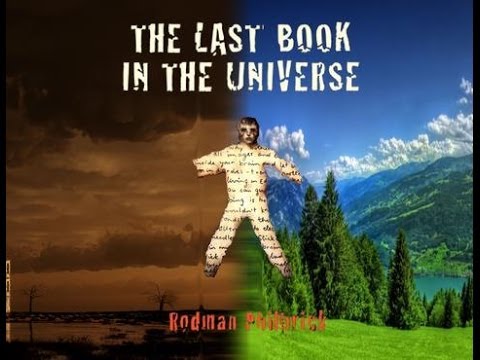
The last book in the Universe, by Rodman Philbrick, is set after" the big shake" which has demolished all modern civilization. The main character is a teenage boy nick-named Spaz, who suffers from a disease called epilepsy. This is almost like an advantage in a world with dangerous brain-drain entertainment systems, mindprobes. He is one of the rare human beings, along the old man Ryter, who can truly see life the way it is. With the orders from the Bangers, he attempts to "rip-off" an elderly man named Ryter, who simply gives him all his belongings, except for a stack of papers he calls a book. Later, Spaz finds out his beloved foster sister is suffering from leukemia and she wants to see him before she dies. He desperately begs Billy Bismo, the latch boss, if he could leave to see her but he disagrees. Spaz tries to escape, but when he is surrounded by a group of stack-boxers, he unwillingly has a seizure. The old man Ryter finds him and brings him to his stack. There, he makes Spaz bring him along on the journey. The two of them, and a small boy they call Little Face, all leave through the pipe to find his sister on the other side of the Urb. On their way they save a proov named lanaya from an attacking, cannibalistic latch, who in turn takes them in her takvee on the risky route to Beans latch. They arrive, only to have the latchboss capture them and force them to search for a mindprobe smuggler. They find him, only to learn that mindprobes are supplied from Eden. They flee the area and Lanaya sneaks them into Eden to cure Bean's cancer using gene therapy. Soon though, proovs notice that there are normals in Eden, which is strictly forbidden. The three normals get exiled back to their own latches, and Lanaya's contributors (parents) illegally adopt Little Face. Back in the Urb, Ryter gets blamed for the deactivation of mindprobes, so the Bully Bangers brutally murder him and destroy his book. His last words were," you're the book now! You're the last book in the universe! Make it a good one!" So now Spaz uses a voice writer to tell his story.
One theme that I found very pronounced in this book was, don't dwell on the past, live in the present, and strive to make the future better. One example of this was in Spaz's book. He was writing about how this old gummy changed his life."If there's one thing I learned from Ryter it's that you can't always be looking backward or something will hit you from the front."(8) Another reference to this theme is when Ryter and Spaz are back in the stacks after Eden. "You must remember the past because it brings you here, to the right now, today, this moment, and from here you can look to the future. A possible future I never even imagined until we went on our great adventure. I won't get a chance to see that future, but you will."(210)My final example is one of the first times Spaz met Ryter. The old man is wise and realizes that this idea is important to get the most from life."My book is the work of a lifetime.'
'You're wasting your time, I tell him. 'Nobody reads books anymore!' Ryter nods sadly. 'I know. But someday that may change. And if and when it does, they'll want stories-experiences- that don't come from a mindprobe needle." Here he is implying that he is writing his book to tell the people of the future his story, and maybe inspire them to change their ways.
This book is
set in a futuristic dystopia where the world was destroyed by a universal colossal earthquake. Not very many people survive, and even then they separate the dirty Urb from Eden, where they genetically enhance themselves and scorn at the other "normals." This "outside" is scattered into latches, which are like small towns or villages in the modern day. These latches are much different though, they are governed by gangs and controlled by powerful Latch Boss's. Spaz, the protagonist, lives in a concrete stack box with close to no belongings. It is very dangerous here with toxic air and gang riots 24/7. He is living here not because he was born here, but because he was banished from his family unit years ago."When I had my seizure and everything blew, Charly(foster father) got it fixed in his head that I was growing up dangerous and that somehow Bean(foster sister) might get infected with whatever it was that made me a spaz. Bean never saw it coming when I had to leave,"(35) This suggests that he wishes that he was back with Bean and his family unit, not in the threatening latch where there's a chance he is killed every day. Once they all get to Eden, its literally like a dream to see blue sky, rivers, grass and even the soaring skyscrapers. When they go back to the polluted Urb, and Ryter is slaughtered, Spaz feels alone and tries hard to forget Eden and Ryter. Lanayas note, however, gives him hope in the stackbox." Do not despair my friend. Today is theirs, but the future is ours."(223)
I would definitely recommend this book for any seventh, eighth, or even sixth grader who is interested in a short, futuristic book. It is full of action and adventure, and despite the grim plot, there are some fun, upbeat parts. But unfortunately, there are also many somber sections. The book is wrapped up nicely with spaz being the new Ryter and writing about their adventures. There is definitely room for a sequal, and I am now interested in other books by Rodman Philbrick thanks to this great read.
